



Minute ventilation
-
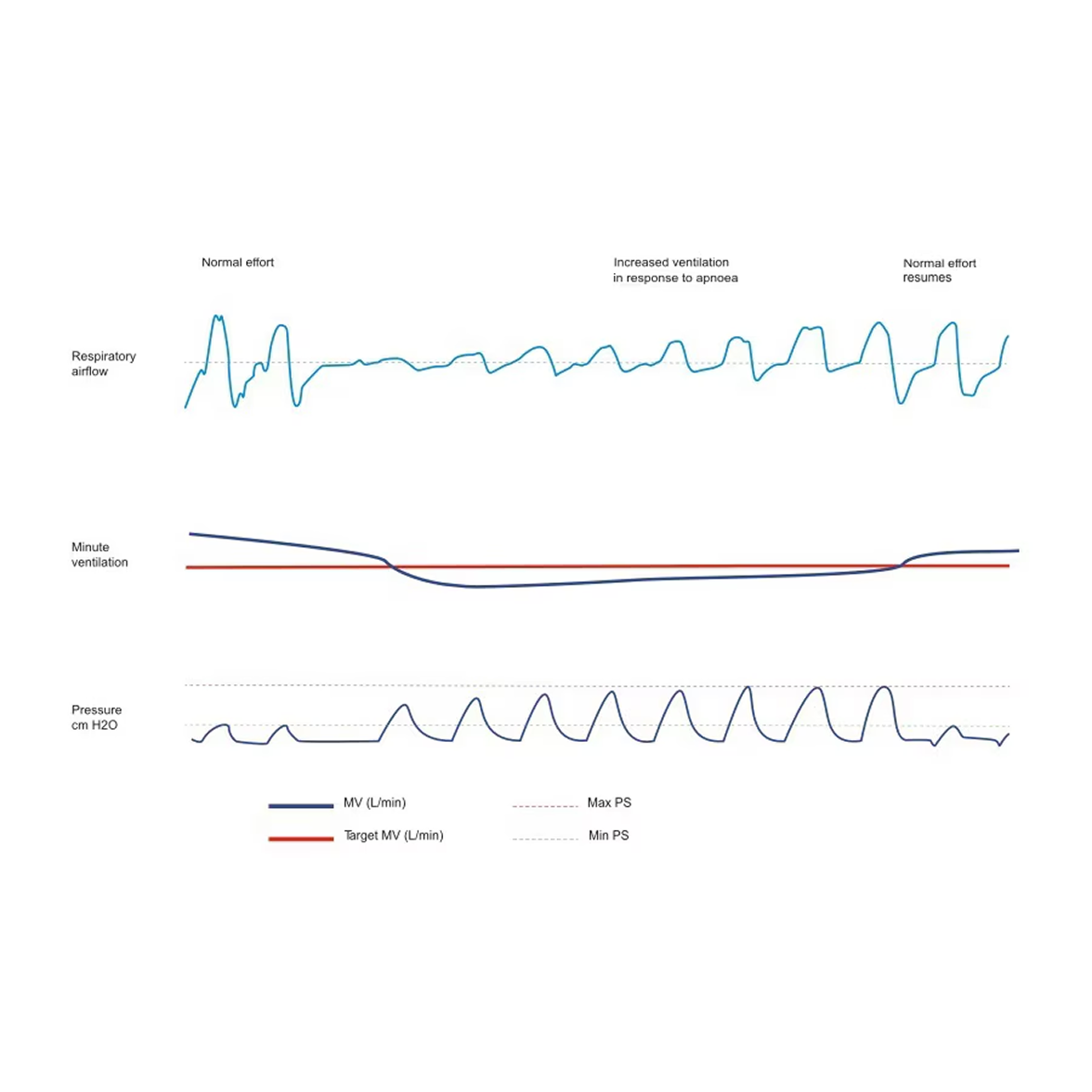
ASV algorithm calculates respiratory parameters (frequency, shape of the breathing wave, tidal volume) at a split-second resolution on a 3-minute moving average, in order to calculate the patient’s own minute ventilation.
-
The target is automatically set to 90% of the patient’s average recent minute ventilation to prevent over-ventilation.
-
ASV compares the patient’s current minute ventilation with the target minute ventilation and responds rapidly and precisely to changes in minute ventilation.
-
Pressure support is increased when minute ventilation falls below target and is reduced to the minimum level set by the physician when minute ventilation exceeds the target.
Breathing phase mapping
ASV analyses 13 points per breath and accurately monitors and adjusts its response to deliver a comfortable experience for the patient.
-
With its high-resolution breath phase mapping algorithm (13 points per breath), ASV accurately monitors variations in minute ventilation, which depends on respiratory rate and breathing pattern.
-
The ASV algorithm adapts precisely and rapidly in response to the patient’s needs.
-
Effective synchronisation with patient’s own respiratory patterns participate to therapy comfort.
-
ASV continuously learns from each patient’s unique respiratory pattern.
-
The Easy-Breathe wave form mimics the shape of natural breathing and pressure support is synchronised with the patient’s spontaneous breathing.
-
Pressure support is synchronised with the patient’s spontaneous breathing and adapted to the minute ventilation, in order to achieve the target pressure. This provides comfort that supports the patient’s acceptance of the therapy.

ASV and ASVauto mode
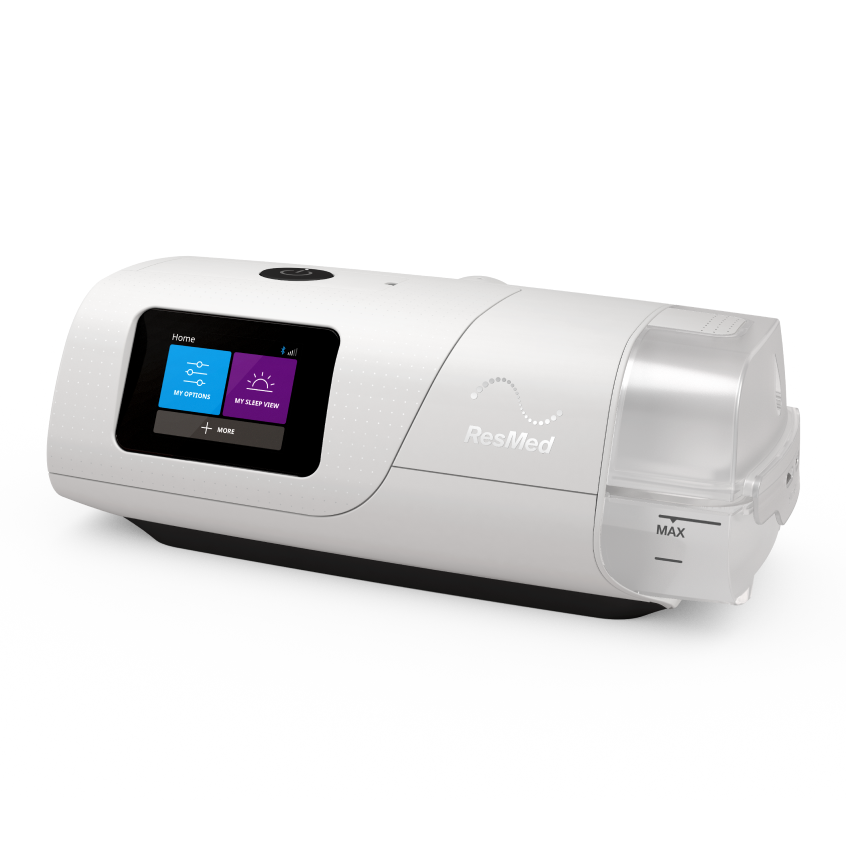
The AirCurve 11 ASV features two modes: ASV and ASVAuto. It ensures effective treatment by stabilising upper airways and delivering constant expiratory pressure.
-
ASV mode: expiratory positive airway pressure is manually titrated and set at the start of therapy.
-
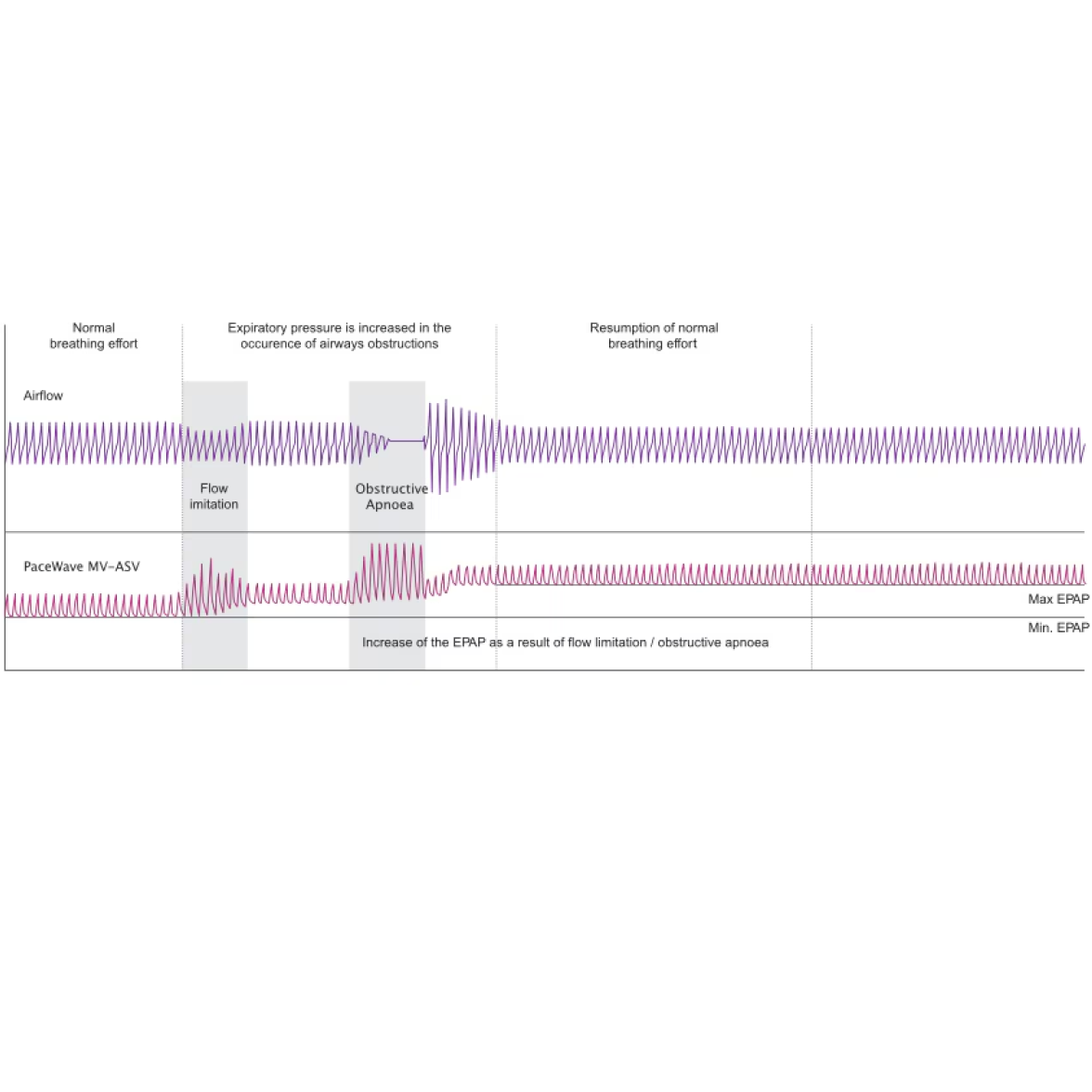
ASVAuto: expiratory positive airway pressure is automatically adjusted in response to predictive signs of upper airway obstructions (apnea, flow limitation and snoring). Automatic expiratory positive airway pressure responds to obstructive events and stabilises the upper airways.
Learn more about our AirCurve 11 ASV
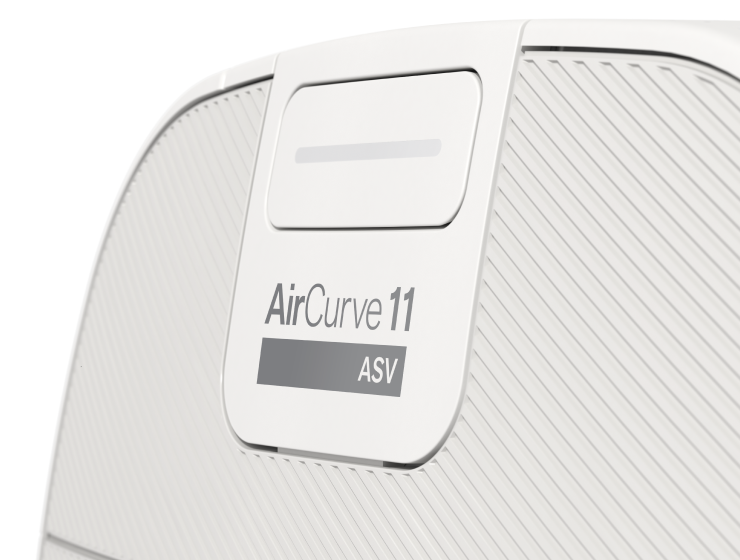
Design to deliver personalised therapy for patients with central sleep apnea and with or without obstructive sleep apnea.
Looking for more information about CSA and ASV?
Treatment options for CSA
How to treat your CSA patient