



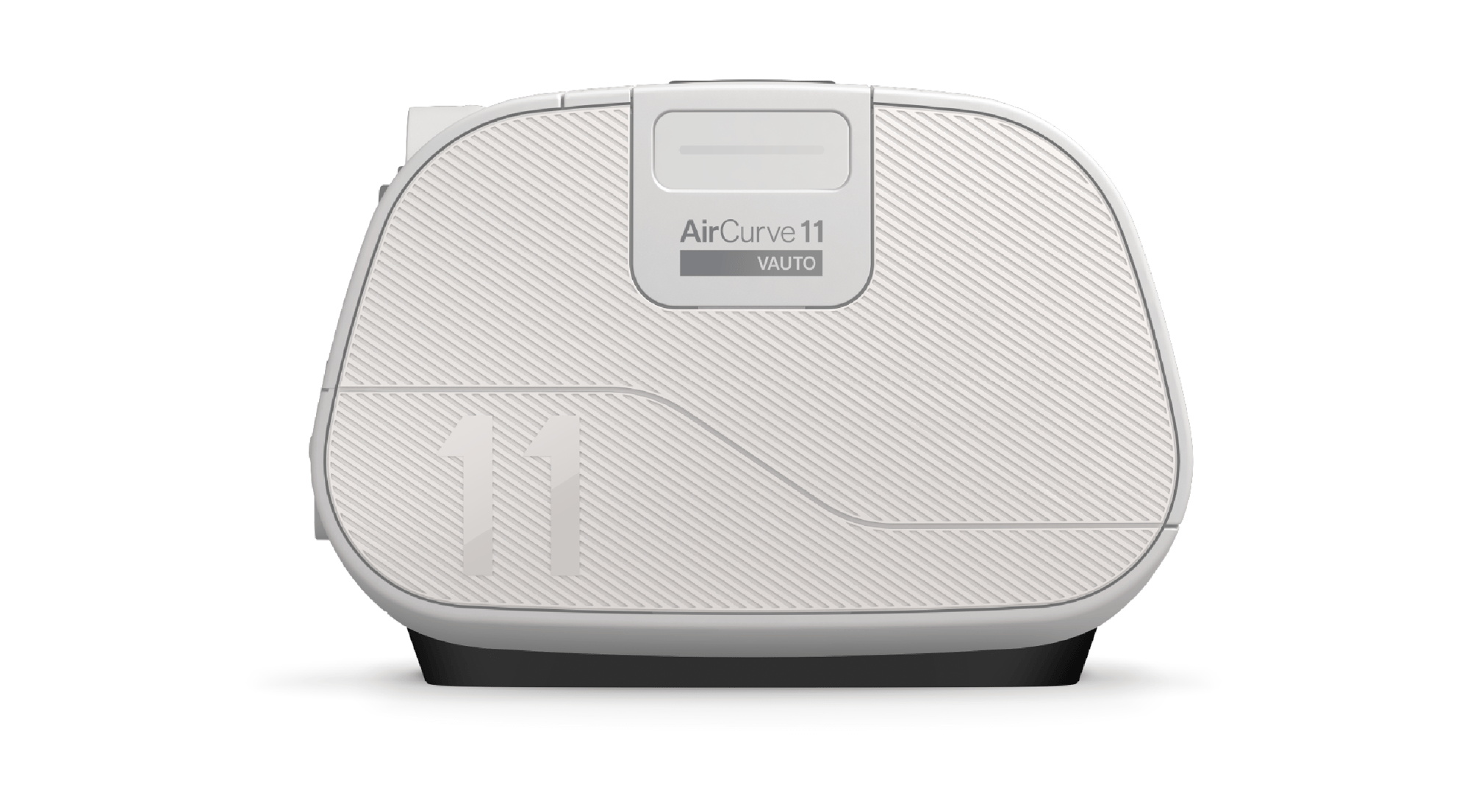
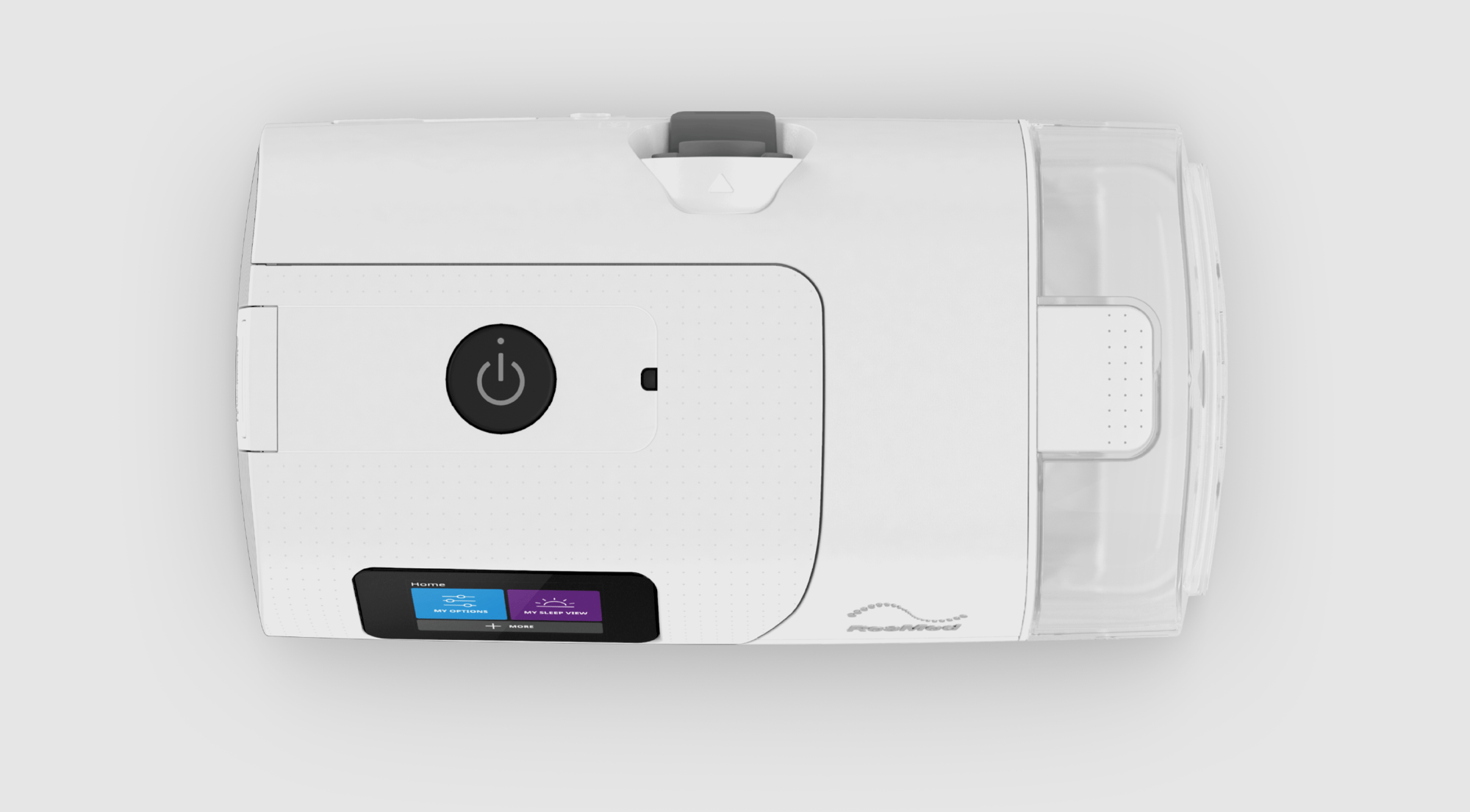
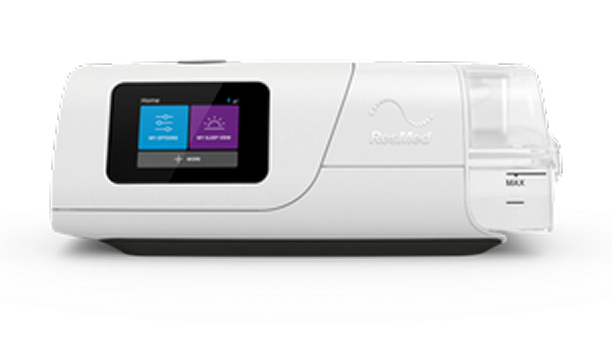
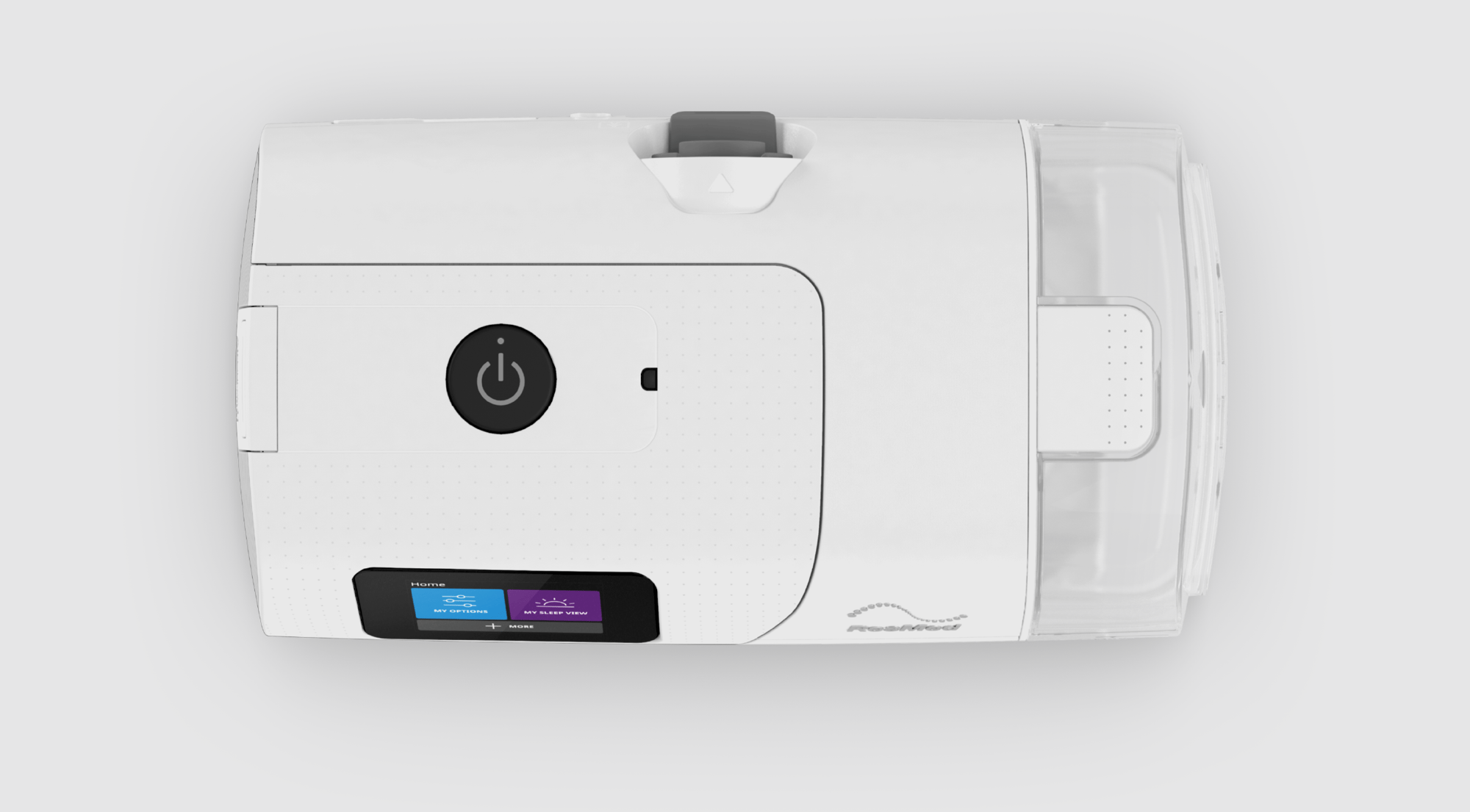
AirCurve™ 11 VAuto
Auto-adjusting bilevel device
A bilevel PAP device with two separate pressures designed to improve comfort and therapy adherence for people with obstructive sleep apnea by mimicking patients’ breathing patterns.

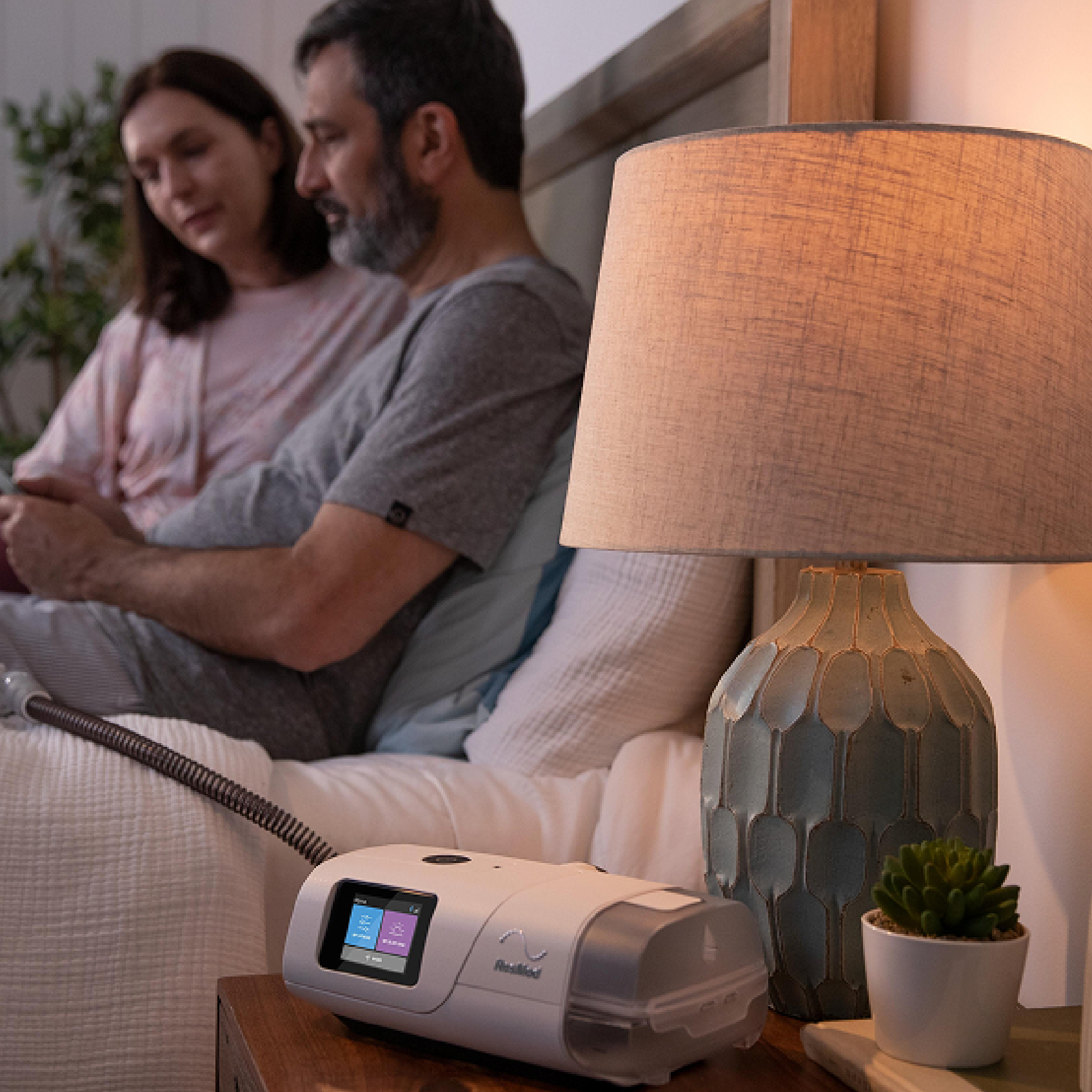
For OSA patients who struggle with standard therapy
Some patients find it challenging to adapt to standard CPAP or APAP therapy as they struggle to breathe against a continuous flow of air at a set pressure level. Adjusting becomes even harder when CPAP pressures must be higher to maintain airway patency.
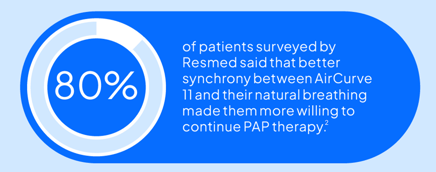
AirCurve 11 VAuto delivers bilevel therapy with auto-adjusting EPAP and fixed pressure support, designed to improve comfort and associated with improved PAP therapy adherence by providing higher pressure during inhalation and lower pressure during exhalation.1
The VAuto algorithm is proven to have a positive effect on sleep quality and daytime sleepiness for patients switching from continous pressure to Resmed VAuto bilevel therapy.3
For a next-level comfort and therapy experience
Featuring the Easy-Breathe waveform and Resmed’s proven AutoSet™ algorithm, VAuto continually monitors each patient’s unique breathing pattern on a breath-by-breath basis, making automatic adjustments for a comfortable therapy.1,3,4
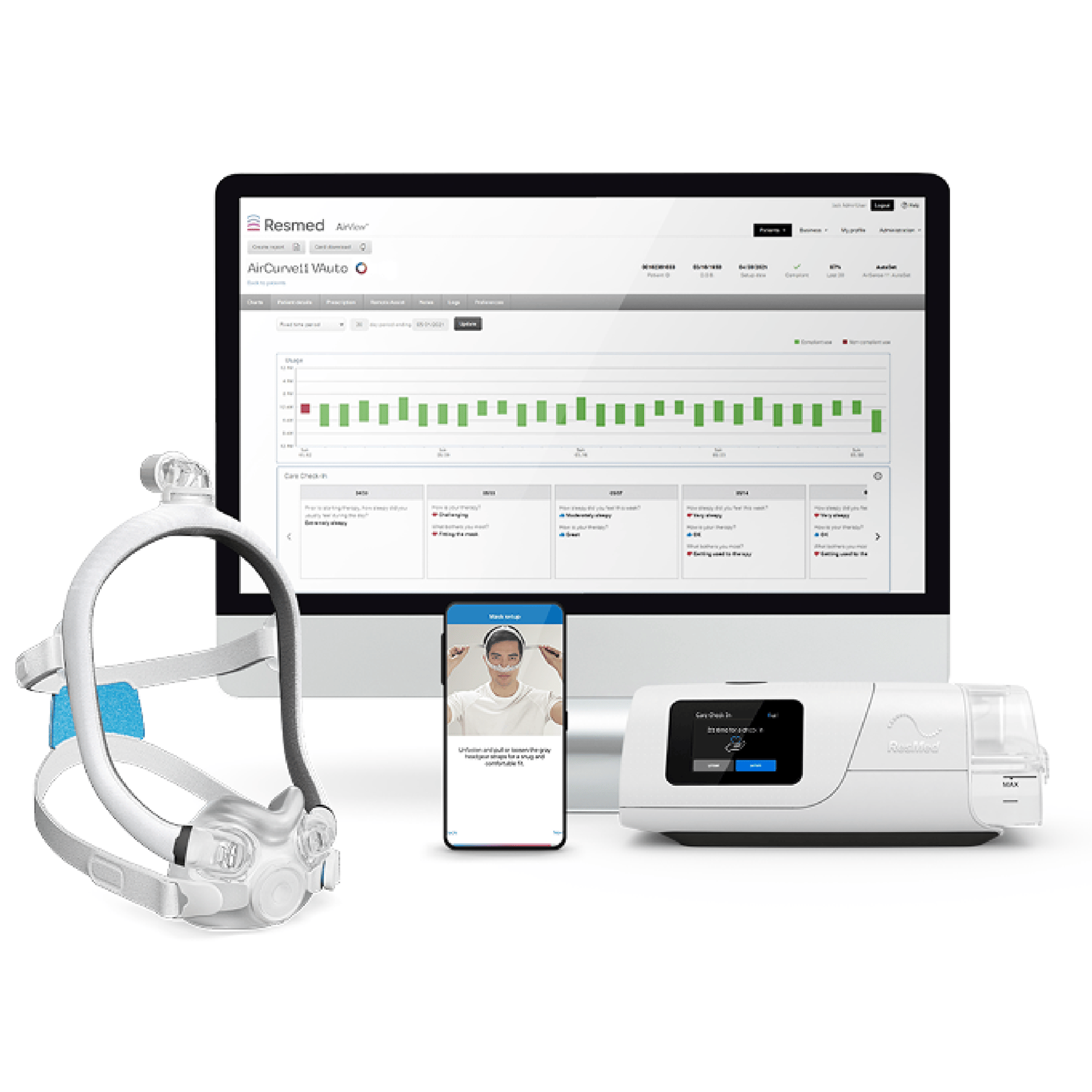
Smarter with the Air11™ ecosystem
Featuring a seamlessly integrated connected care system with enhanced
support features and Over-the-Air updates, the Air11 connected ecosystem is
designed to provide patients with an easier start to therapy and a more
successful acclimatisation period.5
How VAuto algorithm works?
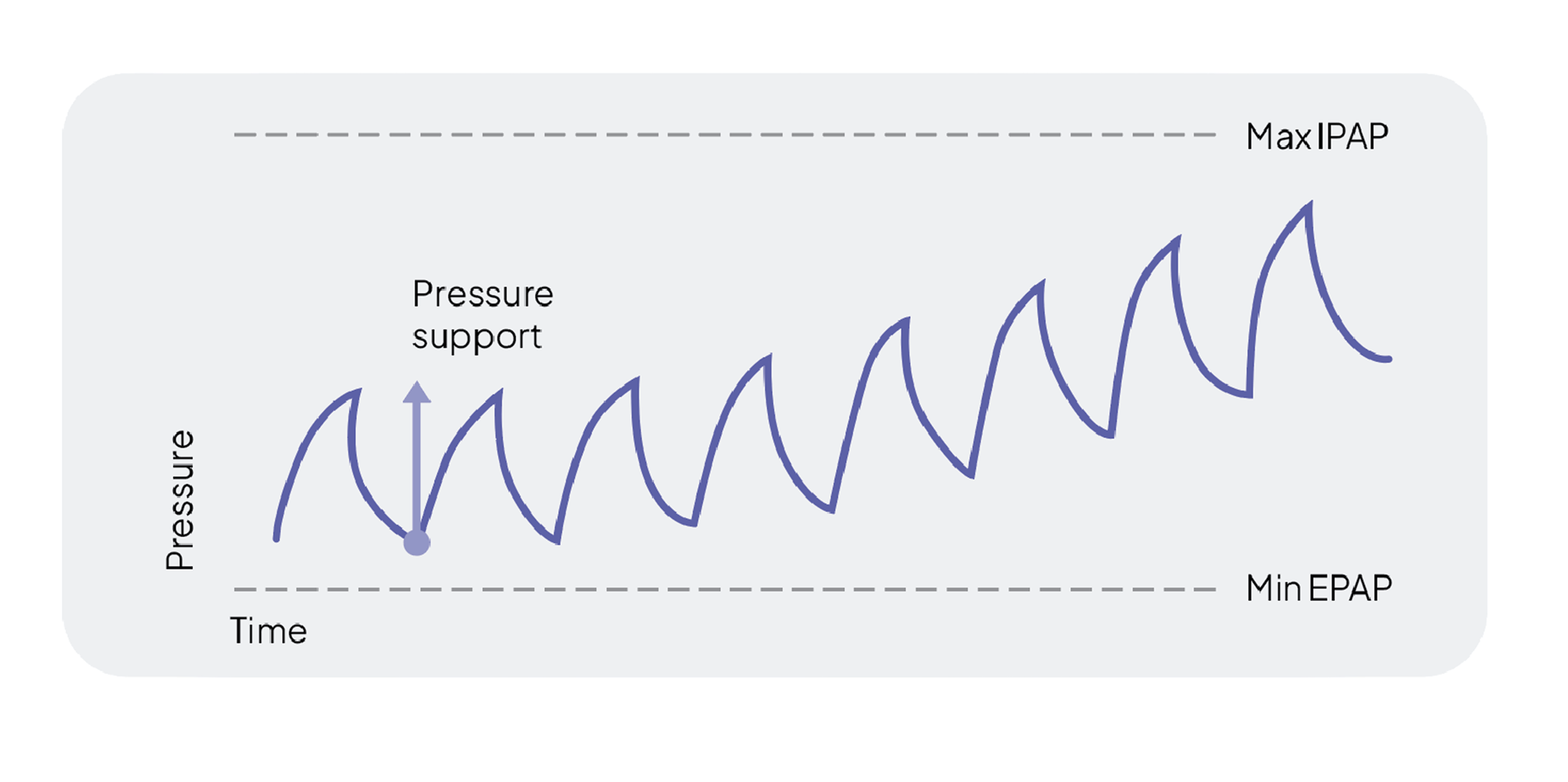
Min EPAP and Max IPAP
Min EPAP and max IPAP set the pressure ranges in which the algorithm operates and automatically adjusts pressure in response to flow limitation, snoring and obstructive apneas.
Pressure support
Pressure support sets the difference between inspiratory and expiratory pressure and is fixed throughout the night.
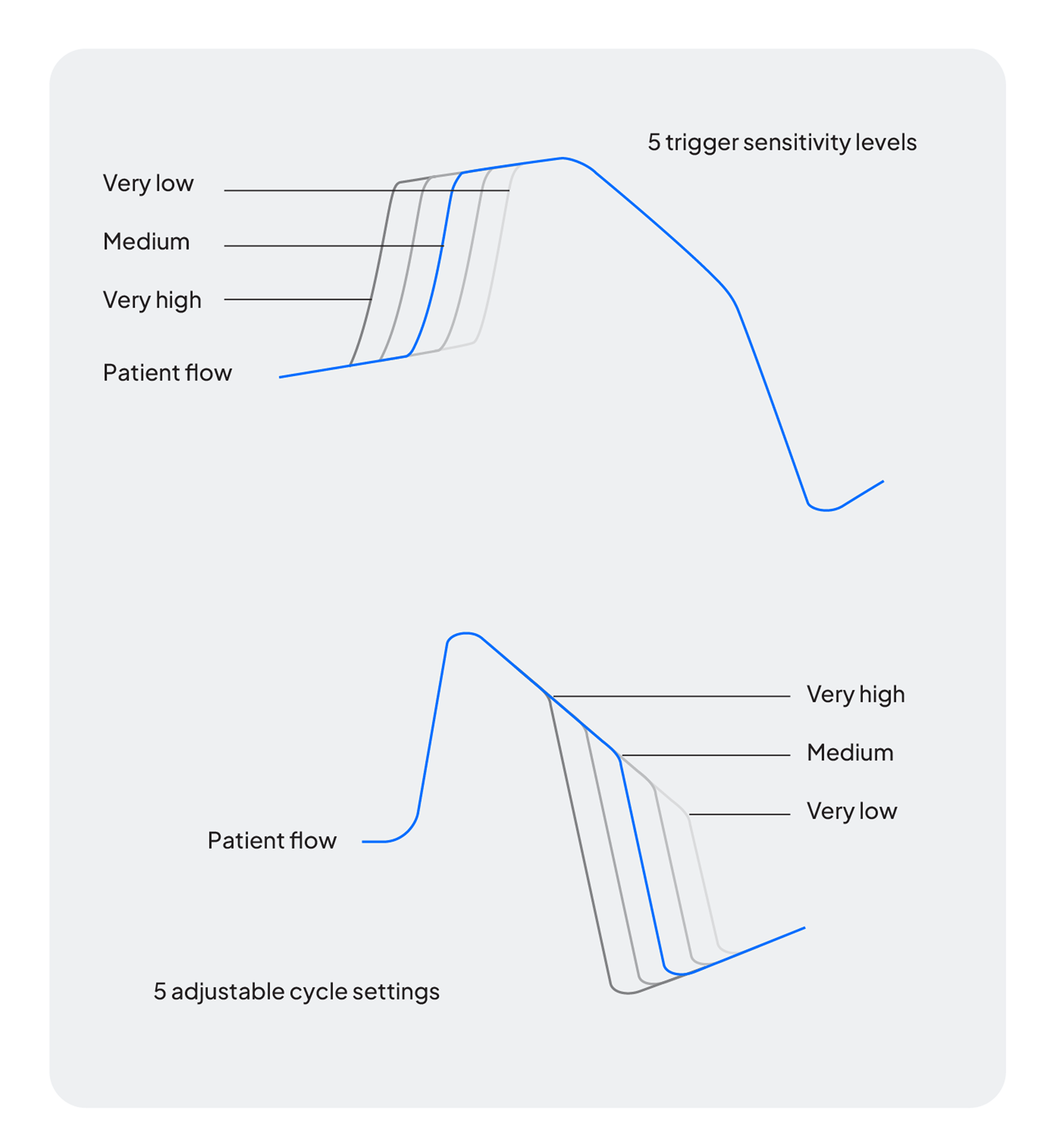
Trigger and Cycle sensitivity
Resmed’s adjustable Trigger and Cycle settings allow you to customise a patient’s ventilation profile based on their physical condition and breathing capability.
It helps fine-tune the detection of the start and end of each breath and adjust
the effort required to trigger inspiration and cycle to expiration.
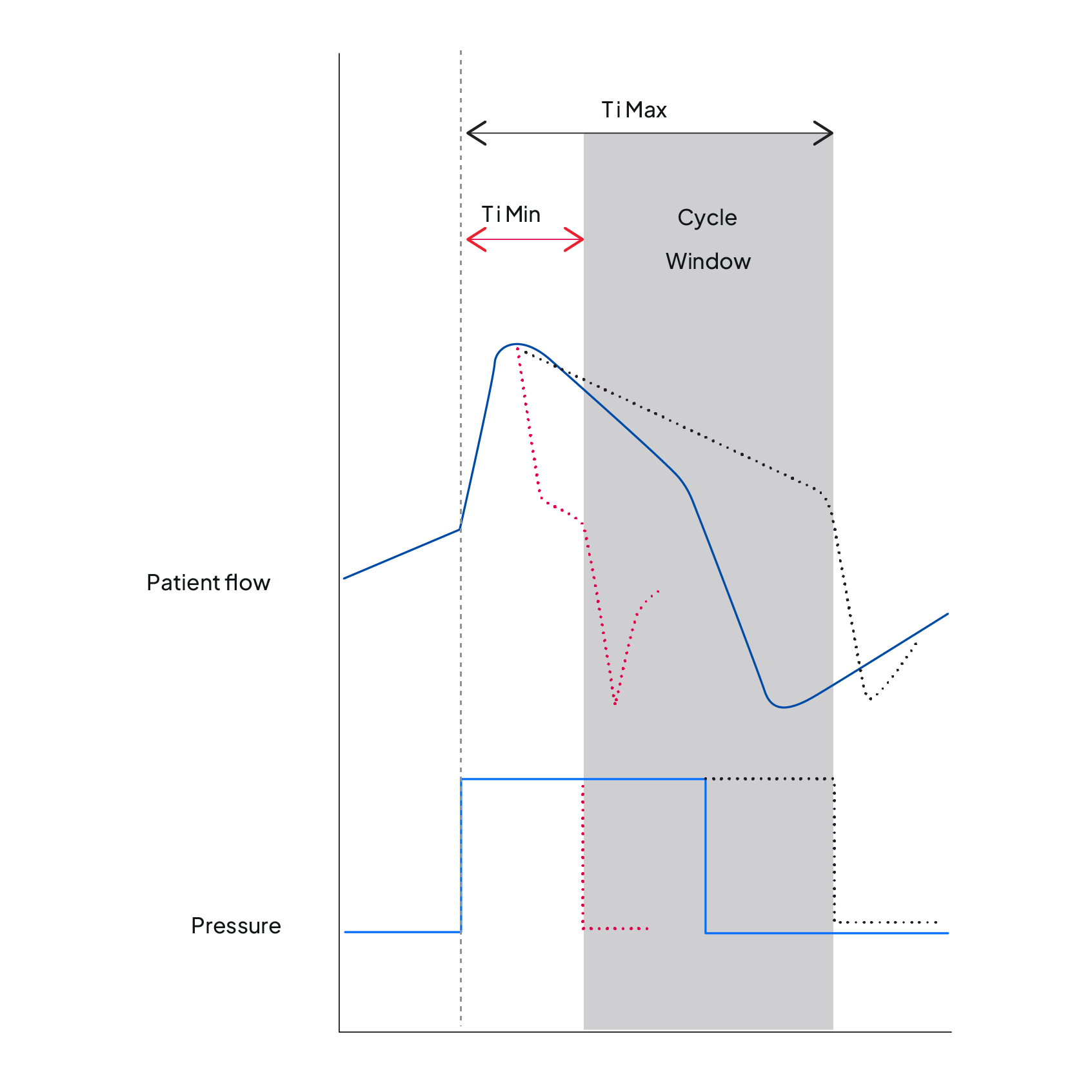
TiControl™
TiControl helps support patient-device synchrony by enabling the
setting of minimum and maximum inspiratory time limits.
This helps create an inspiratory cycle that aligns with the patientˇs
natural breathing pattern and may reduce instability caused by
premature or delayed
cycling to expiratory pressure.