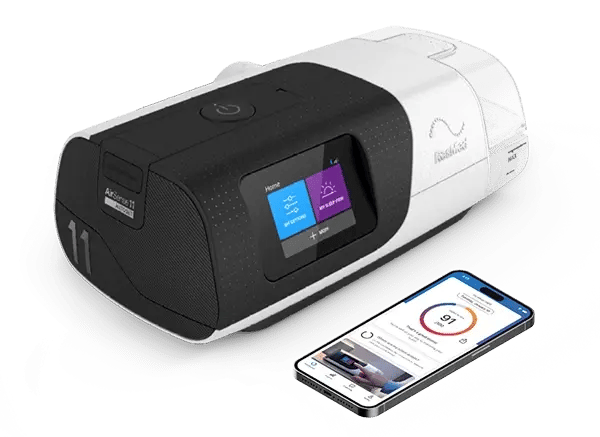


AirCurveTM10 CS PaceWaveTM
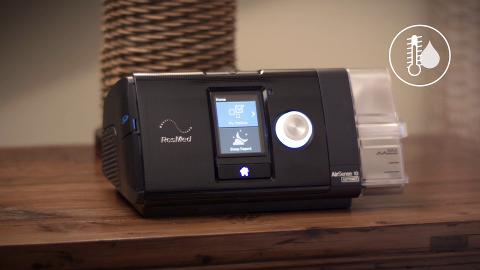
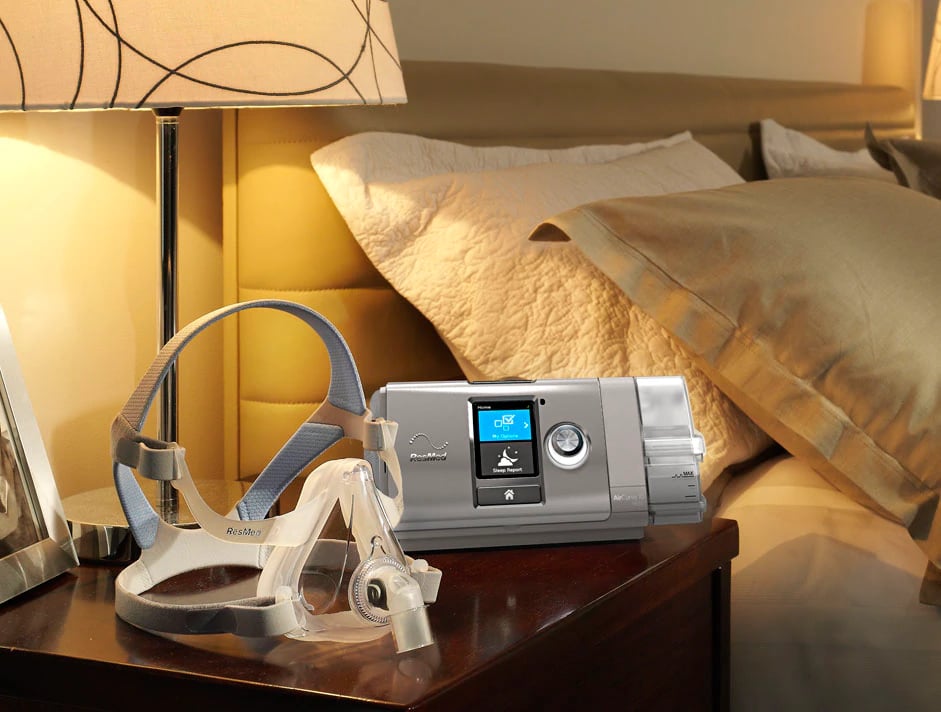
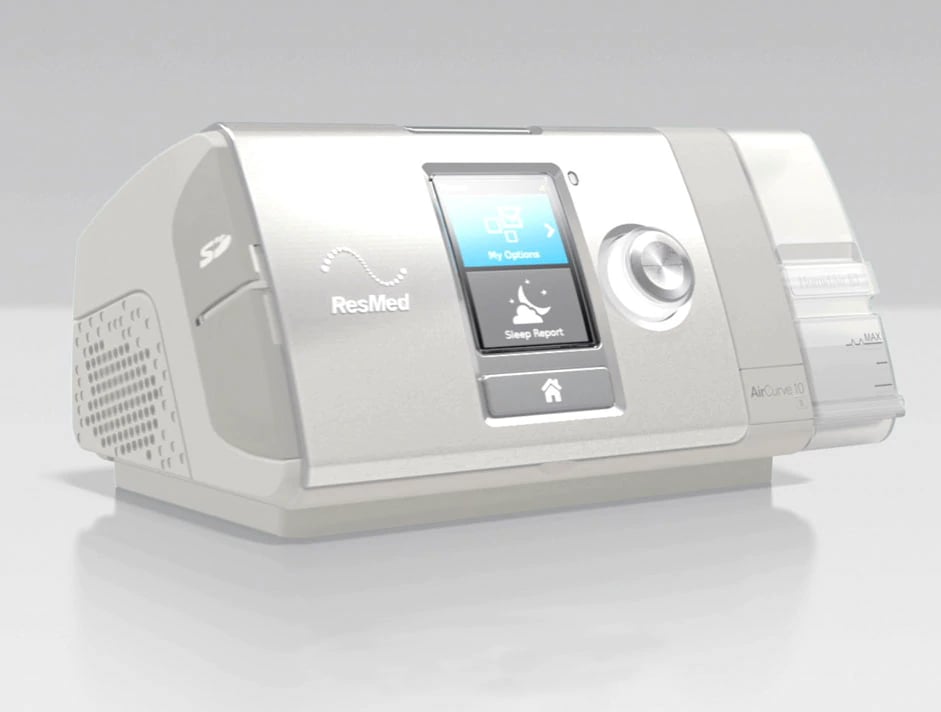
The AirCurve 10 CS PaceWave is an adaptive servo-ventilator specifically designed to treat patients exhibiting central sleep apnea (CSA), mixed sleep apnea and periodic breathing, with or without obstructive sleep apnea
Featuring the most clinically-studied ASV algorithm, AirCurve 10 CS PaceWave is the only adaptive servo-ventilator that targets the patient’s own recent minute ventilation.
The device also features built-in wireless connectivity** so you can stay more connected to your patients than ever before.
** Wireless communication depends on network availability
ASVAuto mode
ASVAuto mode adapts to a patient’s ventilatory and upper airway stability needs on a breath-by-breath basis. By treating central breathing disorders with auto-adjusting Pressure Support and upper airway obstruction with auto-adjusting EPAP, it rapidly stabilises breathing and blood gases helping improve sleep quality.1,2
PaceWave is the most clinically studied ASV therapy.
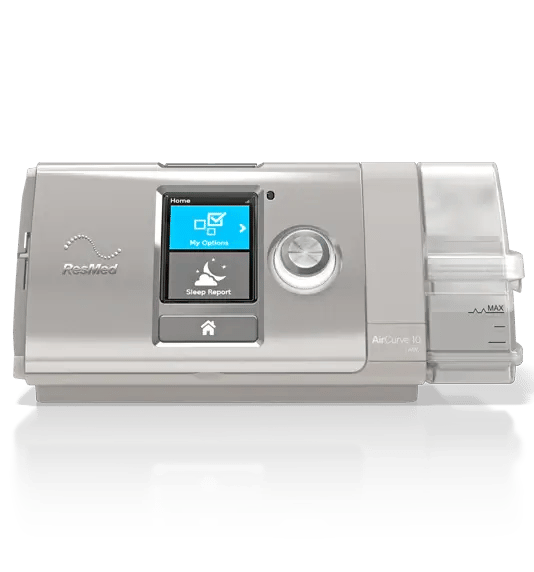
ASV mode
In ASV mode, the EPAP can be manually titrated to set the optimal fixed EPAP to keep the upper airway open.
Other features
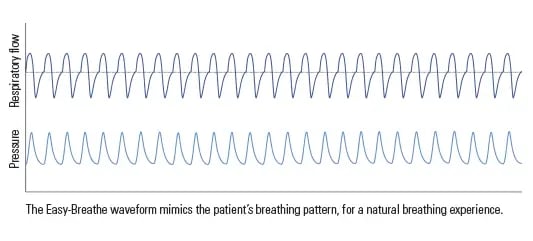
- Easy-Breathe pressure waveform mimics the wave shape of normal breathing and replicates it for the patient’s breathing comfort.
- Continuous leak management enables reliable delivery of therapy pressure while maintaining patient-device synchrony.
- Climate Control comprises the HumidAir™ humidifier and the ClimateLineAir™ heated tube and is designed to deliver constant, comfortable temperature and humidity.
Humidification (AU)
For a fully integrated approach to patient care, prescribe Resmed Air Solutions products.
Functional features
| AirCurve 10 CS PaveWave | |
|---|---|
| CPAP | ✔ |
| VAuto | ✔ |
| S mode | |
| ASV | ✔ |
| ASVAuto | ✔ |
| Easy-Breathe waveform | ✔ |
| TiControl | |
| Trigger and cycle | |
| Climate Control | ✔ |
| Enhanced Climate Control Auto | ✔ |
| Vsync leak management | ✔ |
| Built-in wireless connectivity ** | ✔ |
* Wireless communication depends on network availability
Technical specifications
| Dimensions (H x W x D) (Device and water tub) |
116mm x 255mm x 150mm | ||
|---|---|---|---|
| Weight | 1248g | ||
| Air filter | Standard: Average arrestance >75% for ~7 micron dust | Hypoallergenic: Efficiency >98% for ~7–8 micron dust. >80% for ~0.5 micron dust |
|
| Aircraft use | Meets Federal Aviation Administration requirements for all phases of air travel. | ||
| Operating pressure range | 4 to 20 cm H2O | ||
| Pressure level measured according to ISO 17510-1:2007 (CPAP mode) | |||
| SlimLine or Standard air tubing | 26.6 dBA ±2 dBA | ||
| Power level measured according to ISO 17510-1:2007 (CPAP mode) | |||
| SlimLine or Standard air tubing | 34.6 dBA ±2 dBA | ||
| Sound (Declared dual-number noise emission values in accordance with ISO 4871:1996.) | |||
| Air tubing | ClimateLine™ Air | SlimLine™ | Standard |
| Length | 6'6" | 6' | 6'6" |
| Inner diameter | 0.6" | 0.6" | 0.75" |
| Electromagnetic compatibility | Complies with all EMC requirements according to IEC60601-1-2:2007 for residential, commercial and light industry environments. It is recommended that mobile communication devices be kept at least 1m away. | ||
References
Morgenthaler TI, Gay PC, Gordon N, Brown LK. Adaptive servoventilation versus noninvasive positive pressure ventilation for central, mixed, and complex sleep apnea syndromes. Sleep. 2007;30(4):468-475.
Brown SE, Mosko SS, Davis JA, Pierce RA, Godfrey-Pixton TV. A retrospective case series of adaptive servoventilation for complex sleep apnea. J Clin Sleep Med 2011;7(2):187-195.
*ASV therapy is contraindicated in patients with chronic, symptomatic heart failure (NYHA 2-4) with reduced left ventricular ejection fraction (LVEF ≤ 45%) and moderate to severe predominant central sleep apnea.