
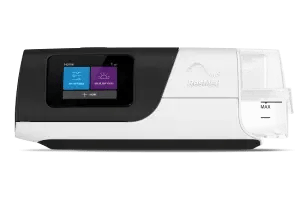
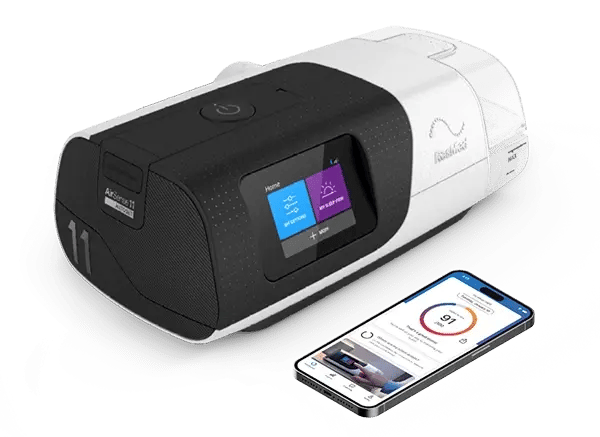


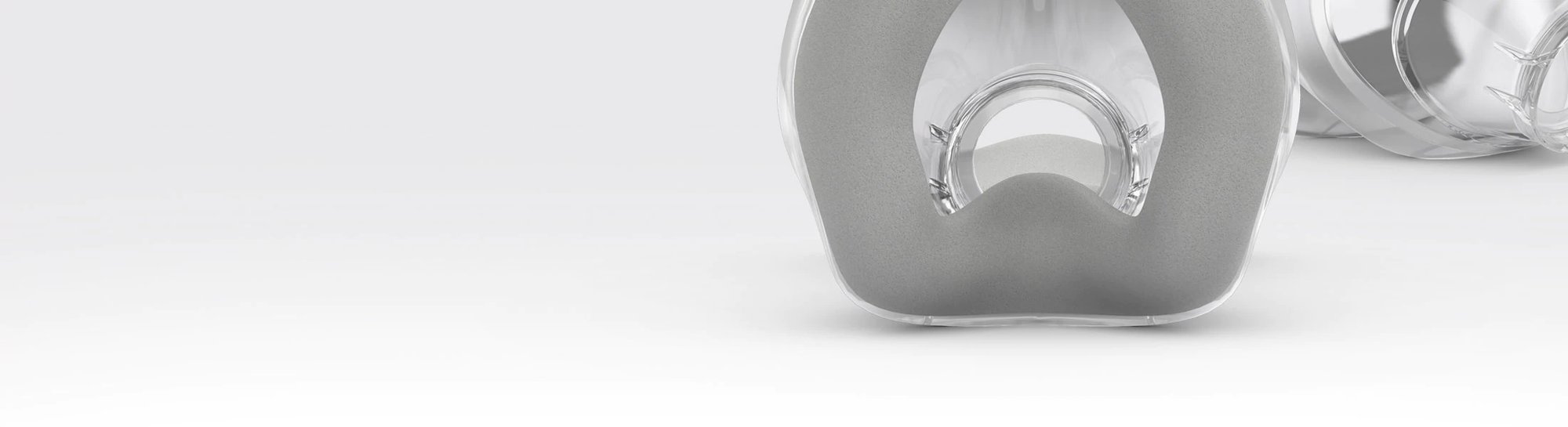
- Our softest nasal mask ever features an UltraSoft™ memory foam cushion that is designed to adapt to the most challenging facial features.
- Interchangeable with the Resmed AirFit™ N20 InfinitySeal™ silicone cushion.
- Light, breathable cushion is designed to be gentle on the skin and to provide a secure seal even up to high therapy pressures*
- No wet cleaning required with regular cushion replacement.
The mask contains magnets that may interfere with certain implants or medical devices. Please refer to the Support documents for complete labeling information, including magnet contraindications and warnings.
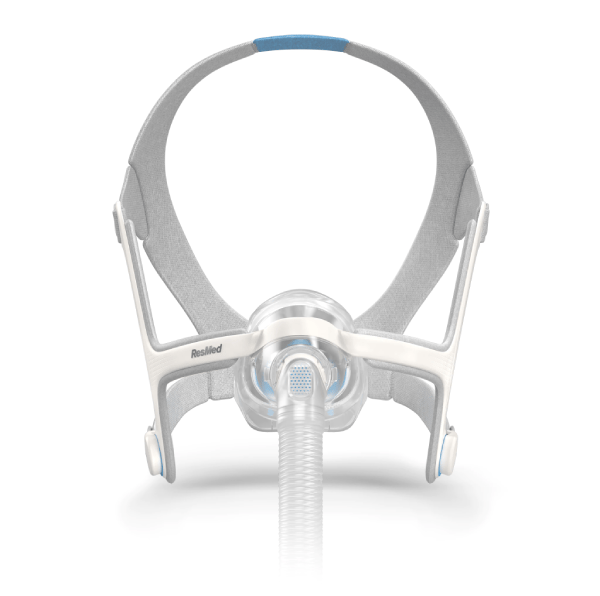
Mask comfort redefined
Resmed AirTouch N20 is our first nasal mask to use patented Resmed UltraSoft™ memory foam cushion technology that adapts to each patient’s face for a personalised fit. Like our full face option, it’s designed to provide a light and breathable seal for unprecedented comfort and reduced skin irritation.
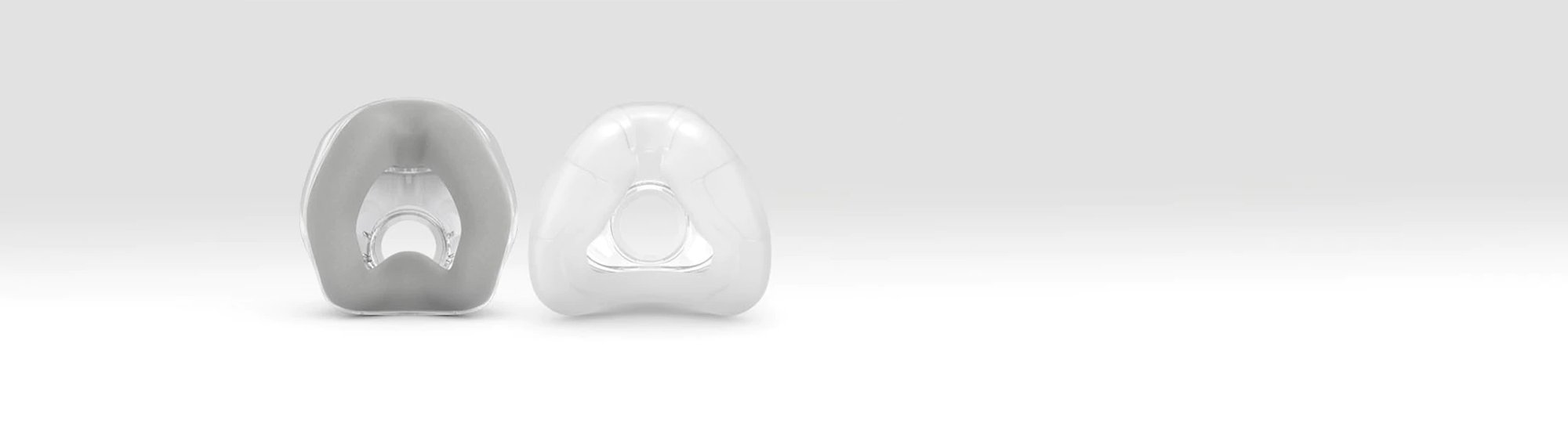
Interchangeable with AirFit™ N20 cushions
This mask features a modular frame design that fits both the Resmed AirFit N20 InfinitySeal™ silicone cushion and AirTouch N20 UltraSoft™ memory foam cushion. This means you can conveniently switch between the two during fittings and send customers home with both to see which one they prefer.
No cleaning with regular replacement
AirTouch N20 is our only nasal mask that doesn’t require wet cleaning as its memory foam cushion is designed to be replaced regularly. Studies confirm that AirTouch mask cushions are hygienic to use for one month without cleaning.1-3
If customers prefer to clean the cushion, a quick wipe down with non-alcoholic wipes will do the trick.

AirTouch N20 for Her
This mask is also available in a for Her version, which features a smaller size and lavender accents.
Explore

Supporting you
Sizing the mask cushion
- Familiarise yourself with the cushion-sizing template provided and the cushion sizes available.
- Hold the sizing template under the patient’s nose, and use it to help determine the most suitable cushion size. For this mask, you are only looking to assess the width of the patient’s nose.
- Select the matching cushion and try it on your patient for comfort and fit.
Fitting
- Take the mask elbow/short-tube out of the frame by squeezing the quick-release buttons and pulling the elbow out.
- Ensure the magnetic clips are not connected to the frame. Twist and pull them away from the frame if they are.
- Place the cushion under your patient’s nose, and pull the headgear and frame over their head.
- Bring the lower headgear straps under your patient’s ears, and attach the magnetic clips to the frame on both sides.
- Unfasten the upper headgear straps, and pull them evenly until the mask is secure and comfortable.
- Unfasten the lower headgear straps, and pull them evenly until the mask is secure and comfortable.
- Pick up the elbow/short-tube and connect it to the air tubing from the CPAP machine.
- Reattach the elbow/short-tube with the air tubing to the frame.
Supporting your patients
Managing mask leak
- If you feel air escaping the mask cushion from any area other than the vent, you should try the following steps to locate and stop the leak.
- If air is escaping from different areas of the cushion, try pulling it away from your face and letting it reseal itself.
- Run your finger over the top half of the cushion to check for upper cushion mask leak.
- Adjust the upper headgear straps as needed to achieve a secure seal.
- Run your finger under the bottom half of the cushion to check for lower cushion mask leak.
- Adjust the lower headgear straps as needed to achieve a secure seal.
Mask Inspection
Regular inspection of your mask is essential to ensure it is working correctly. If you find any damage, you should replace the mask component.
- Examine the mask system and become familiar with its components.
- Follow the user guide instructions to disassemble the mask.
- Examine the cushion for signs of wear, tear and damage.
- Examine the frame for signs of wear, tear and damage.
- Examine the elbow and short-tube for signs of wear, tear and damage.
- Examine the headgear for signs of wear, tear and damage.
- Reassemble your mask as per user guide instructions.
Mask disassembly
- Ensure your mask is not connected to your CPAP machine.
- Unfasten the upper headgear straps, and pull them out from the frame.
- Squeeze the quick-release buttons on the elbow, and pull up to detach it from the frame.
- Hold the mask cushion firmly with one hand. With your other hand, place your thumb so that it sits under the notch on the mask frame. Use this notch to unclip the frame, and pull it away from the cushion.
Daily mask cleaning
- Follow the mask disassembly instructions to disconnect the mask cushion and elbow/short tube.
- Wipe the cushion with a dry cloth or non-alcoholic wipes, and then set it aside.
- Soak the elbow/short-tube in warm water and a mild liquid detergent.
- Hand wash the elbow/short-tube inside and out with a soft bristle brush. Pay particular attention to cleaning the vent holes.
- Rinse the elbow/short-tube under running tap water.
- Leave the elbow/short-tube to air dry alongside the mask cushion away from direct sunlight.
Weekly mask cleaning
- Follow the mask disassembly instructions to disconnect the mask headgear and frame.
- Soak each of the components in warm water and a mild liquid detergent.
- Hand wash each of the components.
- Rinse each of the components under running tap water.
- Leave each of the cleaned components to air dry away from direct sunlight.
Mask assembly
- Ensure you have all the mask components and parts together.
- Insert the mask cushion into the mask frame, and push them together.
- Hold the headgear so that the Resmed logo is upright and facing towards you.
- Insert each of the upper headgear straps into the frame, and fold the fastening tabs over to secure.
- Connect the mask elbow/short-tube to the frame until it clicks into place.
Helpful resources
Getting started with therapy
Register your product

Resmed's myAir program

Warranty & Servicing
An ecosystem of solutions for individual answers
Our device, mask and accessory ranges, together with our online support program myAir™, enable you to easily customise your therapy experience to your preferences.

References
* AirTouch N20 is validated at therapy pressures up to 30 cm H2O.
Resmed AirTouch F20 bioburden safety analysis of foam cushion: 45-day assessment of 20 evaluable participants (in place of usual CPAP mask.) July 9, 2009 to July 20, 2010 in Sydney, AU.
Resmed AirTouch F20 bioburden safety analysis of foam cushion: 60-day assessment of 14 evaluable participants. (in place of usual CPAP mask) July 9, 2009 to July 20, 2010 in Sydney, AU.
Resmed AirTouch F20 bioburden safety analysis of foam cushion summary: combined results from 45 and 60-day assessment of 34 evaluable participants. March 26, 2019 in Sydney, AU.